
Selling an Inherited House in Buffalo, NY: Erie County Surrogate's Court, Letters, and the Two-Family Double Problem
Inherited a Buffalo double or single-family house? How Erie County Surrogate's Court letters, New York's executor power of sale, the small estate limit, the PCDS fiduciary exemption, upstairs tenants and winter carrying costs affect selling as-is. Call (405) 622-8705.
Short answer: In Buffalo, the person who sells an inherited house is the estate’s executor or administrator, and they can’t sign anything until Erie County Surrogate’s Court issues letters. Once they have letters, New York law usually lets them sell without a separate court order, and a fiduciary’s sale is generally exempt from the state’s Property Condition Disclosure Statement. The house itself can’t go through New York’s small estate shortcut, so plan for a full probate or administration case from the start.
Who is this guide for?
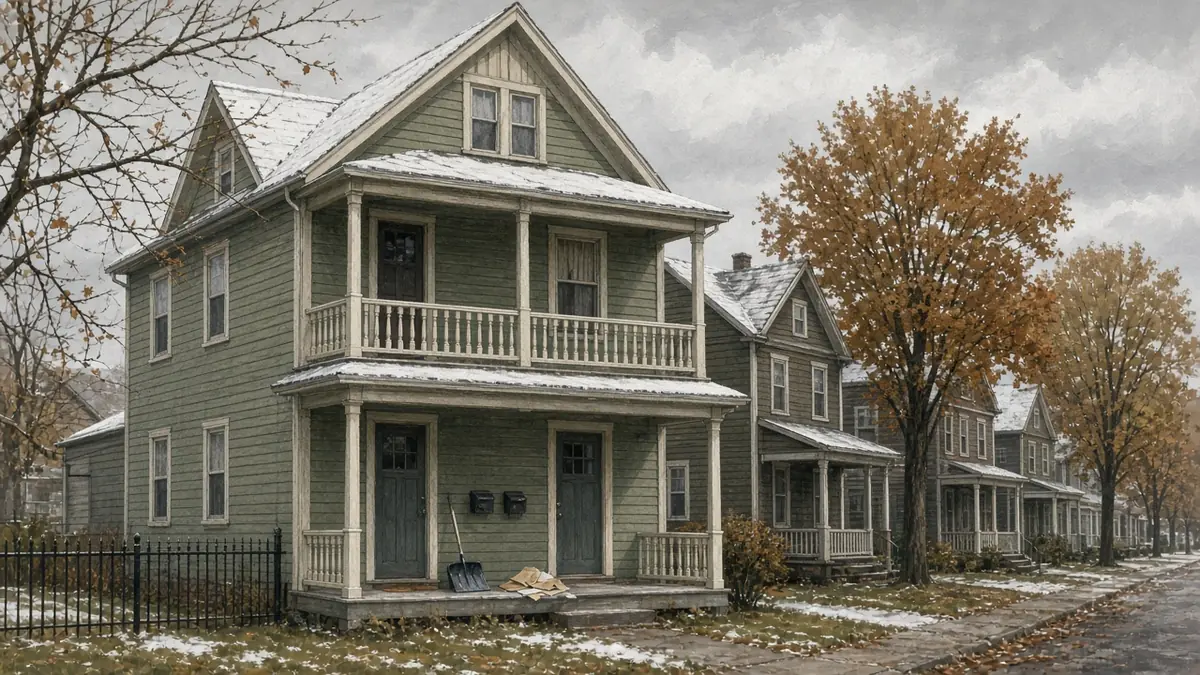
It’s for the sibling who moved to Charlotte or Denver years ago and just learned they’re the executor of a parent’s house on the West Side, in South Buffalo or in Kenmore. It’s often a Buffalo double, the tall wood-frame two-family house with one flat stacked on top of the other and two front doors on the porch. Mom or Dad lived downstairs. Someone has rented the upper flat for a decade. The furnace is old, the gutters are full, and the first lake-effect storm is weeks away.
You want to know what you can do now, what has to wait for the court, and whether it makes sense to fix, list, or sell as-is. This guide covers the New York rules that apply anywhere in the state and the Erie County steps that apply to a Buffalo estate. For the wider upstate market, see our Buffalo and Rochester cash buyer hub and the Buffalo, NY city page.
Which court handles a Buffalo estate?
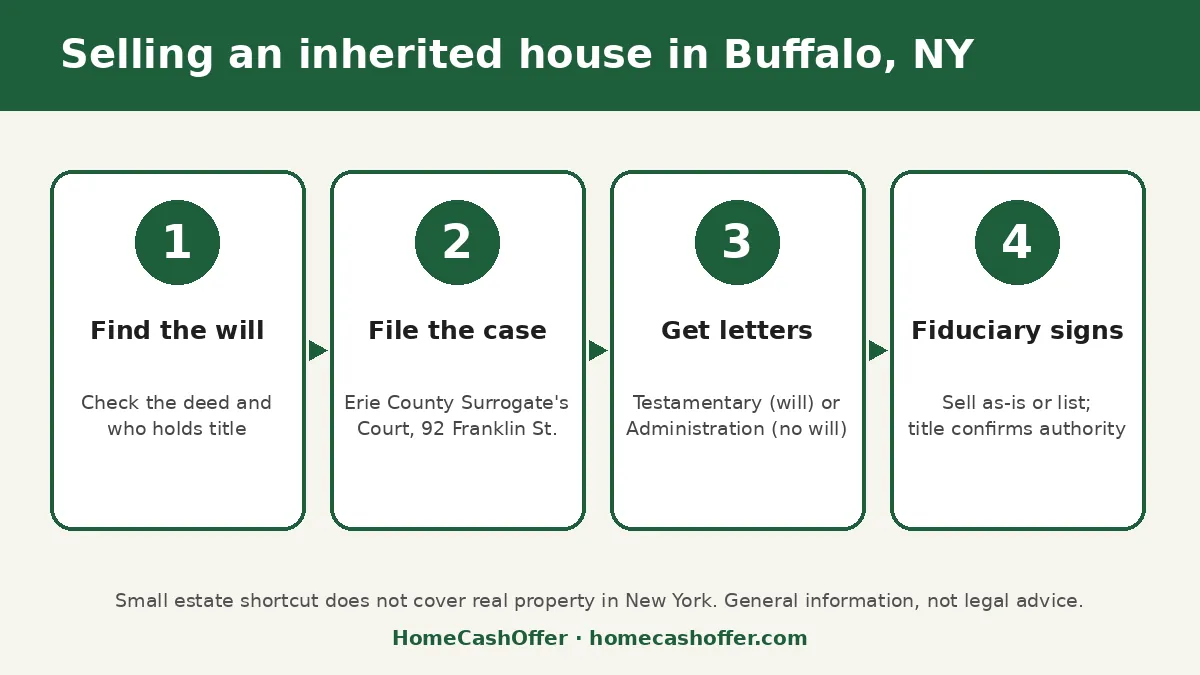
Erie County Surrogate’s Court, if the person who died lived in Buffalo or anywhere else in Erie County. The court sits on the second floor of Erie County Hall at 92 Franklin Street downtown. If your parent actually lived in Niagara County, say in North Tonawanda or Lockport, and only owned the Buffalo house as a rental, the case starts in Niagara County instead, and Erie County may only come up later.
Two practical points trip up out-of-town families. First, the court’s e-filing protocol says e-filing has been mandatory for estate proceedings started on or after May 28, 2020. Attorneys must e-file, while people representing themselves are exempt but may opt in. Second, the same protocol tells filers to check first whether a file is already open under the person’s name and to contact the court about whether another will was left there for safekeeping. A will nobody in the family knew about can change who the executor is.
Is there a will, and what does it change?
It changes the name of the paperwork and who gets appointed. With a will, the named executor files for probate and receives Letters Testamentary. Without a will, the closest family member files for administration and receives Letters of Administration. Either way, the person who died is called the decedent, and the family members who inherit under state law are called distributees.
In an administration case, the distributees have to be formally notified through a document called a citation, unless they sign waivers consenting to the appointment. That’s where most of the time goes in a Buffalo estate with several adult children spread across the country. If every sibling signs a waiver and a renunciation of bond quickly, the case moves. If one sibling won’t sign, or can’t be found, the court has to serve them, and the house waits.
What to gather now, before anyone files:
- The original will, not a copy, if there is one.
- A certified death certificate.
- The deed or the tax bill for the Buffalo house, so you know exactly whose name is on the title.
- A list of every child, and the children of any child who died earlier. The petition needs a full family picture.
- The mortgage, home equity line, and utility account numbers, so someone can keep the heat on.
Can the executor sell without asking a judge?
Usually yes. New York’s fiduciary powers statute, EPTL 11-1.1, says that unless the will, the appointing order, or a later order limits it, a fiduciary may sell estate property at public or private sale on terms they think are best for the people with an interest in it. That covers both executors and administrators.
There are two exceptions to check before you sign a contract. One is a restriction printed on the letters themselves. Read them line by line, because some letters limit what the fiduciary can do without further court approval. The other is a house the will specifically leaves to one person (“my house on Hertel Avenue to my daughter”). The general power of sale doesn’t reach a specifically left property, so the executor needs that person’s agreement or a court order. If the will says “everything to my three children equally,” the house isn’t specifically left, and the normal power applies.
If a sale is needed and the will or letters block it, the statute lets the Surrogate approve the power for the purposes listed in SCPA 1902, such as paying debts and expenses. That’s a petition your estate attorney files, and it adds time.
Can the family skip probate because the estate is small?
Not for the house. New York’s small estate process, called voluntary administration, is for estates with $50,000 or less in personal property, according to SCPA section 1301. The next section of the same article says it doesn’t apply to an interest in New York real property. A modest Buffalo estate with a paid-off double and a small bank account still needs a full probate or administration case to sell the house.
The exception is a house that never belonged to the estate in the first place. If your parent owned it jointly with a surviving spouse with a right of survivorship, the spouse already owns it. Check the deed before assuming anything, because Buffalo families sometimes discover that a house they thought was Mom’s alone was titled with a long-dead grandparent, which creates a second estate to sort out.
What does a fiduciary have to disclose to a buyer?
Less than an ordinary seller, but not nothing. New York’s Real Property Law section 463 lists transfers that don’t require the Property Condition Disclosure Statement, and number 7 is a transfer by a fiduciary in the course of administering a decedent’s estate. That matters more than it used to. As the New York State Bar Association explains, the old option of giving the buyer a $500 credit instead of the form was removed effective March 20, 2024, and the form gained questions about flood zones and flood insurance claims.
The exemption belongs to the fiduciary’s sale. If the estate deeds the house to the heirs first and the heirs sell it themselves, talk to the estate attorney about whether they then owe the form.
The federal lead paint rule is a separate duty. The EPA’s real estate disclosure rule generally requires sellers of housing built before 1978 to disclose known lead-based paint hazards, provide the pamphlet, and include the warning language in the contract. Most Buffalo doubles were built long before that, so expect the lead form to be part of any sale, cash or listed. The estate will also sign New York’s real estate transfer tax return at closing; the state’s transfer tax forms page lists the TP-584 and related forms the title company will prepare.
What about the tenant in the upper flat?
The lease survives the owner’s death. Whoever is administering the estate becomes the landlord in practice: they collect the rent, keep the heat and water working, and respond to repair requests. Rent from the upper flat goes into the estate account, and it can help pay the tax bill and insurance while the case is open.
A buyer can take the house with the tenant in place, which is common with Buffalo doubles because the next owner often wants the rental income. If the family wants to deliver it vacant, ending a tenancy in New York has to follow state law, and the rules for notice and eviction are strict. Talk to a New York landlord-tenant attorney before anyone asks the tenant to move, and don’t change locks or shut off utilities to speed things up.
What does the house cost while letters are pending?
More in a Buffalo winter than most out-of-state heirs expect. A vacant lower flat with the thermostat turned down is a frozen-pipe risk from December through March. The roof and the gutters take the snow load. The sidewalk still has to be shoveled. Many homeowner policies also limit coverage once a house sits vacant, so call the insurer right away, tell them the owner died, and ask what coverage the estate needs.
Keep a simple ledger of everything you pay: taxes, insurance, utilities, snow removal, lawn care, and repairs. The estate generally reimburses those costs, but only if you can show them.
What is the Buffalo market doing right now?
It’s been moving fast, which matters when you’re deciding whether to list. According to Redfin’s Buffalo housing market page, the median sale price in Buffalo was $232,889 in September 2026, up 1.7% from a year earlier, and homes sold after a median of 15 days. The average sale-to-list ratio was 103.7%, and 59.7% of homes sold above list price.
The Census Bureau’s QuickFacts for Buffalo city shows how much of the city rents. The owner-occupied housing rate was 43.0% in the 2020–2024 American Community Survey, the median value of owner-occupied homes was $164,200, and median gross rent was $1,046 a month. Those are survey estimates over five years, so they run lower than recent sale prices, but they explain why a double with a reliable upstairs tenant appeals to so many local buyers.
The catch is that those fast, above-list sales are mostly market-ready houses. An estate house with a 1970s kitchen, a basement full of belongings, and an old boiler competes in a different pool of buyers.
From our deals
The inherited houses we look at in older cities like Buffalo usually come with the same three questions: whose name is really on the deed, who has authority to sign, and what’s in the house. Families who have the letters, the deed, and a rough idea of the tenant’s lease in hand get a firm answer from us quickly. The ones who struggle are usually waiting on a sibling’s signature, not on the house. We’d rather wait for the letters and close cleanly than sign a contract that can’t close.
When should the family list instead of selling for cash?
- The house is in good shape and a family member lives nearby. With Buffalo homes selling quickly and above list, a clean listing usually nets more.
- The upper flat is leased to a tenant who pays on time and the units are updated. Investors and owner-occupants who want rental income may pay full price.
- The family has time and money to carry it through winter. If letters will take months anyway, cleaning out and making light repairs may be worth it.
- Several heirs disagree on price. A listing gives everyone a market number, which can calm a family dispute.
A cash sale makes more sense when the house needs a roof, a boiler, or a full cleanout, when nobody local can manage it through the snow season, when the tenant situation is complicated, or when the heirs need a fixed closing date to divide the proceeds.
How does a HomeCashOffer purchase work with a New York estate?
Send us the address, whether there’s a will, where the court case stands, and whether anyone lives in either unit. We’ll make a written, as-is offer that accounts for the condition and the tenant, and we can sign a contract that closes after the fiduciary has letters and the title company confirms authority. Nobody has to clean out the house first. You can reach us at (405) 622-8705 or request a cash offer online.
HomeCashOffer is a nationwide cash home buyer with its office at 3000 W Memorial Rd, Ste 123 Unit 308, Oklahoma City, OK 73120. For questions about the will, the court case, or a tenant, talk to a New York estate or landlord-tenant attorney.
Related reading: Selling an inherited house in Seattle · Inherited house probate in Indianapolis · Selling a vacant house in Cleveland · Selling an inherited house: the basics · Relocating from New York City
Sell your house fast in these markets
Local cash offer pages—or start with a nationwide request.
Frequently asked questions
Who can sell an inherited house in Buffalo, New York?
Usually the estate's fiduciary: an executor named in the will who has received Letters Testamentary, or an administrator who has received Letters of Administration when there's no will. Both come from the Surrogate's Court in the county where the person lived, which for a Buffalo resident is Erie County Surrogate's Court at Erie County Hall, 92 Franklin Street. Until someone has letters, nobody can sign a deed for the estate.
Does a New York executor need a judge's permission to sell the house?
Often not. Under EPTL 11-1.1, a fiduciary can sell estate property at public or private sale unless the will, the order appointing them, or a later order limits that power. The big exception is a house the will specifically leaves to a named person. That house can't be sold under this general power, so the executor needs that person's consent or a court order. Read your letters and the will closely, because a restriction printed on the letters changes the answer.
Can we use New York's small estate process instead of full probate to sell the house?
No. New York's small estate process, called voluntary administration under SCPA Article 13, covers estates with $50,000 or less of personal property. The statute says it doesn't apply to an interest in real property in New York. If the estate includes a Buffalo house titled in the person's own name, you'll generally need full probate or administration to sell it.
Does the estate have to fill out New York's Property Condition Disclosure Statement?
Usually not when the fiduciary sells. Real Property Law section 463 exempts a transfer by a fiduciary in the course of administering a decedent's estate. If the heirs instead take title themselves and then sell, that exemption may not cover them. Federal lead-based paint disclosure is separate and still applies to most houses built before 1978, which describes much of Buffalo's housing.
What happens to a tenant in the upper flat of an inherited Buffalo double?
The lease doesn't end because the owner died. The estate steps into the landlord's role, collects the rent, and handles repairs and notices. A buyer can take the house with the tenant in place, or the estate can try to deliver it vacant, but ending a tenancy in New York has to follow state law, so talk to a New York landlord-tenant attorney before anyone asks the tenant to leave.
How long does it take to sell an inherited house in Buffalo?
It depends mostly on how long it takes to get letters, which turns on whether there's a will, whether every distributee signs waivers, and whether anyone objects. Once the fiduciary has letters, a cash sale can close on a date the estate picks, often within a few weeks if the title is clear. A listing in Buffalo's current market can also move quickly, but it usually needs the house cleaned out and shown first.
Should we sell the Buffalo house for cash or list it?
List it if the house is in decent shape, someone local can handle showings, and the family can carry it through the winter. Buffalo homes have been selling quickly and above list on average, so a market-ready house usually nets more on the open market. A cash sale makes more sense when the house needs major work, sits vacant through the snow season, has a tenant upstairs, or the heirs live far away and need a fixed closing date.
Ready to see what a cash offer looks like?
No repairs required. No agent commissions when you sell to us. No obligation to accept.
Request your no-obligation cash offer
Prefer a dedicated form? Visit Get a Cash Offer Today.
Get My Cash Offer
Share your name, phone, and property address. No obligation. We will follow up shortly.