
How Do You Sell a House in Probate in Oklahoma City? Court Approval, Timeline, and Costs
The personal representative sells it, usually with a court order, published notice, and confirmation. Oklahoma requires private-sale offers of at least 90% of a recent appraisal unless heirs consent under 58 O.S. § 239. Fall 2026 OKC market data. Call (405) 622-8705.
Short answer: The court-appointed personal representative sells it, usually by getting a district court order, publishing notice of the sale, and having the court confirm it afterward under Title 58 of the Oklahoma Statutes. In a court-confirmed private sale, the offer must be at least 90% of an appraisal made within the past year (58 O.S. § 424). If the will authorizes the sale, or all heirs sign written consents under 58 O.S. § 239, some of those steps drop away. Either way, the estate’s paperwork sets the closing date, so compare the empty house’s monthly carrying costs with cash and listing net proceeds, and confirm the route with an Oklahoma probate attorney.
Last updated October 27, 2026, with the Oklahoma probate sale rules in Title 58 (court order, published notice, the 90% appraisal rule, and the Section 239 consent route), creditor-notice timing, current IRS inherited-basis and 2026 estate tax figures, and fall 2026 market data from FHFA, Freddie Mac, and NAR.
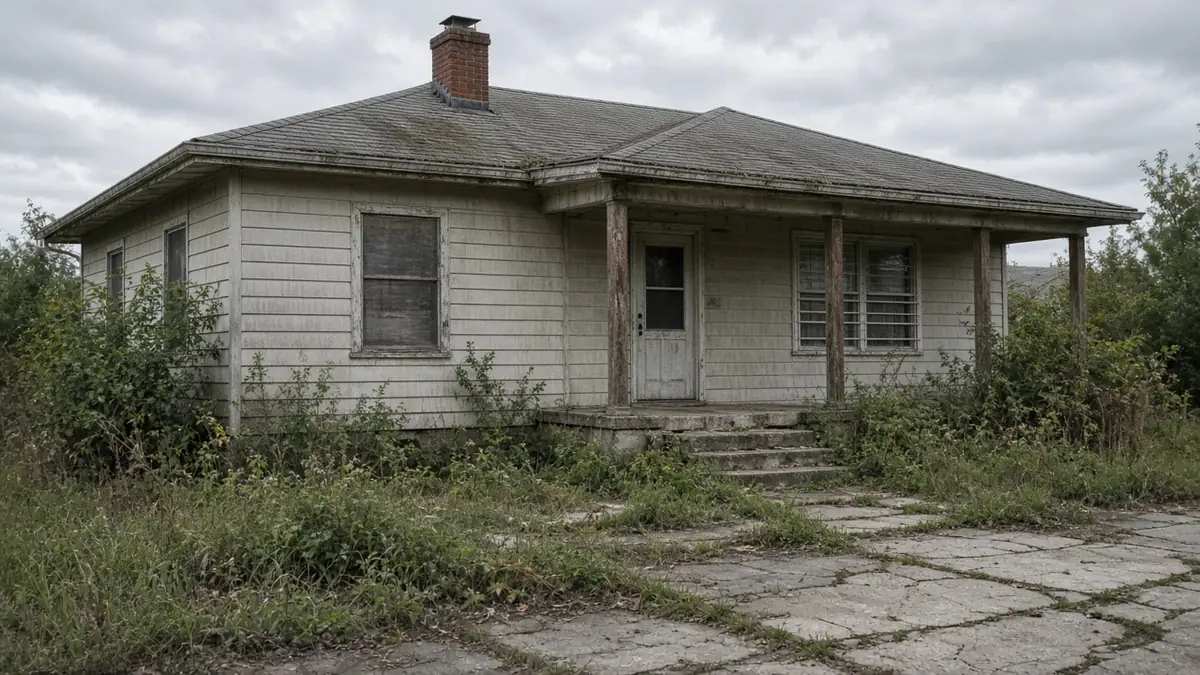
Probate does not pause the mortgage, the lawn, or Oklahoma storm season. While the estate is open, an empty house in Midtown, northwest Oklahoma City, Edmond, or Norman can burn cash every month—even when nobody is living there and heirs are coordinating from Dallas, Houston, or farther away. If you are trying to sell a house in probate in Oklahoma City, the real tension is usually court and estate timing versus carrying costs, not a slogan about “fast cash.”
HomeCashOffer is a nationwide cash home buyer that buys houses as-is across the Oklahoma City metro, including many situations where a personal representative needs a clear number and a closing date that can wait on letters and title—not the other way around. We will not claim cash always beats a strong retail listing. We will help you compare timeline, net proceeds, and stress so you and the estate’s attorney can decide deliberately.
Disclaimer: HomeCashOffer is not a law firm, and this guide is general information, not legal advice. Oklahoma probate, personal representative duties, court confirmations, and title requirements are fact-specific. Verify authority to sell, required signatures, and any court steps with an Oklahoma probate attorney and a title professional before you list or accept an offer.
What does an empty probate house cost while the estate is open?
More than most families expect, because the bills keep coming every month the estate stays open. Most heirs budget for attorney fees and maybe a clean-out weekend. Fewer people budget for an empty Oklahoma City house that stays insured, taxed, and weather-exposed for months:
- Mortgage or other secured debt the estate must keep current (if any)
- Homeowners insurance that may treat long vacancy differently than full occupancy
- Electricity, water, and gas left on for freeze protection, sump pumps, or code reasons—or turned off and creating different risks
- Lawn, snow/ice awareness in winter, and HOA or neighborhood expectations
- Property taxes and any special assessments that do not care that probate is “in process”
- Deferred maintenance that becomes urgent the week a buyer or appraiser finally walks through
That overlap can last longer than the family meeting felt like it would. Every month of carrying an empty house is a real deduction from what heirs hoped to divide. Selling is not the only rational path—keeping the property, renting it carefully, or listing after authority is clear can all make sense—but the spreadsheet should include estate-open months, not only the eventual sale price.
For a citeable state-by-state look at creditor claim periods and small-estate thresholds (including Oklahoma), see How long does probate take? State-by-state timeline. For broader inherited-property context (not probate-OKC specific), see Selling an inherited house. If tenants are still in place, that is a different problem set: Sell an inherited house with tenants in Oklahoma City.
Who can sign to sell a house in Oklahoma probate?
The court-appointed personal representative, not the heirs as a group. Cash or listing, a clean closing needs someone who can convey title for the estate. In probate that usually means a court-appointed personal representative (sometimes still called an executor or administrator in everyday speech) who holds the documents title companies expect—often letters testamentary or letters of administration.
Practical realities heirs run into:
- Heirs may agree emotionally that “we should sell,” yet title still needs the person with legal authority—not a group text consensus
- A will naming someone does not automatically equal the paperwork a title company will accept at closing
- Multiple heirs living in different states does not, by itself, create co-signer chaos the way a living co-owned deed might—but the estate file and deed history still control
- If more than one person was appointed, or if the will or court order limits sale authority, title will look for what those documents require
HomeCashOffer cannot appoint a personal representative, interpret a will, or replace probate counsel. We can work toward a written offer and a closing date once your attorney and title confirm what the file needs. Requesting an offer does not obligate the estate to sell.
Does an Oklahoma probate sale need court approval?
Usually yes, unless the will authorizes the sale or every heir consents in writing. Title 58 of the Oklahoma Statutes sets out three main routes, and your attorney will tell you which one your estate is on:
- Court-ordered sale (the default). The personal representative files a verified application showing the sale is in the estate’s best interest (58 O.S. §§ 411–412). The court sets a hearing not less than 10 days nor more than four weeks out (§ 413). For a private sale, notice must be published once a week for two consecutive weeks and mailed to known heirs, and the sale can’t happen until at least 10 days after the first publication (§ 423). After the sale, the personal representative files a sworn return, and the court sets a confirmation hearing on at least 10 days’ notice (§ 426).
- Sale under the will. If the will authorizes or directs the sale, the executor can sell without a prior court order, but must still make a return of sale, and title doesn’t pass until the court confirms, unless the sale was made under Section 239 (58 O.S. § 462).
- Sale with all heirs’ consent. Once the heirs, devisees and legatees have been determined, and with acknowledged written consents from all of them, the court can authorize the personal representative to sell “without further judicial authorization or a return of sale or confirmation” (58 O.S. § 239). Any consent can be withdrawn later, which puts the estate back on the regular procedure.
The 90% rule matters for any offer, including ours. In a court-confirmed private sale, Oklahoma courts can’t confirm a real estate sale unless the offer is at least 90% of an appraisal made within one year of the sale (58 O.S. § 424). The rule doesn’t apply to property sold under the authority of a will. So before you weigh a cash offer against a listing, ask the attorney whether the house has a current appraisal and which route applies.
Two timing rules sit underneath all of this. The personal representative must file a notice to creditors within two months after letters issue, with a presentment date at least two months after the notice is filed (58 O.S. § 331). And a smaller or older estate may qualify for summary administration, for example when the estate is worth $200,000 or less, the decedent died more than five years ago, or the decedent lived in another state (58 O.S. § 245).
Questions worth answering with the probate attorney before you pick cash or listing:
- Which sale route applies: court order and confirmation, will authority, or Section 239 consent?
- Is there an appraisal from the last 12 months, and what does 90% of it come to?
- How must sale proceeds be handled for the estate (escrow, accounting, distributions)?
- Who is responsible for insurance, utilities, and debt service until closing?
- Can the closing date be set after a known milestone (letters issued, notice completed, confirmation hearing) rather than rushed into a weekend open house?
A direct cash sale can often close when title is ready—sometimes sooner than a financed retail buyer, sometimes later on a date you choose so a probate step can finish first. That flexibility is the product. Details on what a written cash offer usually includes live here: What to expect from a cash offer.
Can out-of-state heirs sell an Oklahoma City probate house?
Yes. What matters is who holds letters, not where the heirs live. Probate property in this metro rarely matches where every heir lives. Patterns families describe (not claimed as statistics) include:
- A parent’s long-time house near Midtown or central Oklahoma City while adult children live in Dallas–Fort Worth, Houston, or another state
- A quieter northwest OKC or Yukon address that sat empty after a move to assisted living, with probate opening later
- School-era neighborhoods in Edmond, Moore, or Midwest City where the personal representative is local but other heirs only visit for the funeral week
- Occasional properties farther east toward Tulsa when the same family is already coordinating one Oklahoma estate conversation
Neighborhood names are context. Your facts are the address, condition, who holds letters, what the will or intestacy rules require, and what title needs. Start with the city page Sell my house fast in Oklahoma City; the metro cash-sale overview is here: Sell my house fast in Oklahoma City metro for cash.
Remote heirs often underestimate how many on-site decisions an empty house still demands: who gets the lockbox code, who meets the plumber after a freeze scare, who photographs rooms for a buyer, who decides what furniture leaves before closing. A cash path typically means fewer stranger showings than a retail season—but it does not eliminate the need for a local walkthrough plan.
What insurance, utility, and weather risks does a vacant probate house carry?
Vacancy limits on insurance, freeze and storm damage, and utility decisions are the big three. An occupied house has eyes on it. A probate house often does not. Across the OKC metro that quietly matters for:
- Vacancy clauses or limits on homeowners policies—ask the insurer (or the estate’s agent) what happens after a set number of empty days; do not assume the old policy behaves like a lived-in home
- Summer heat and winter freezes that punish empty HVAC settings and forgotten outdoor faucets
- Storm season risk on roofs, fences, and trees when nobody is resetting breakers or calling a roofer the same day
- Utilities left in a deceased person’s name, transferred to the estate, or shut off—each choice has cost and risk tradeoffs
- Lawn and exterior appearance that can trigger neighbor complaints or HOA letters while heirs argue about listing photos
None of this means you must sell tomorrow. It means “we will list after we feel ready” should include a monthly carrying-cost line and a vacancy-insurance reality check. If the estate can fund those months comfortably and the house will show well, retail may still win. If every month of vacancy is funded from heirs’ personal accounts, the math shifts.

Is a cash sale easier than listing while probate is open?
Usually, because it needs fewer showings and its closing date can wait on court steps, though it isn’t always the higher net. A traditional listing asks for cleaned counters, flexible showing windows, and strangers walking through a house full of someone else’s life. During probate that can mean:
- Coordinating access when the personal representative lives out of state
- Pausing showings around court dates, notice periods, or family travel for funerals and memorials
- Explaining to buyers why furniture is half-cleared and why the seller cannot “just credit repairs” without estate accounting rules
- Risk that a financed buyer’s loan timeline collides with a probate milestone you cannot accelerate
None of that makes listing wrong. Many Oklahoma City probate homes in good condition still belong on the open market if authority is clear, carrying costs are manageable, and the equity upside is large enough. It does mean you should price friction and calendar risk into the plan. A cash path typically means fewer visits—often one evaluation—and a closing date that can be written to follow letters and title readiness. Compare frameworks here: Cash offer vs. listing with an agent.
What is the Oklahoma City housing market like in fall 2026?
Prices are still rising slowly, but buyers are paying much more to borrow than a year ago:
- Home prices are up modestly. FHFA’s all-transactions house price index for the Oklahoma City metro was 347.28 in the second quarter of 2026, compared with 339.10 a year earlier, a gain of about 2.4% (FHFA House Price Index).
- Mortgage rates are higher than last year. Freddie Mac’s survey had the average 30-year fixed rate at 7.32% as of October 22, 2026, down from 7.40% the week before but up from 6.19% a year earlier (Freddie Mac PMMS).
- Cash is a big slice of the market. Nationally, all-cash deals were 27% of existing-home sales in September 2026, down from 30% a year earlier, and listed homes spent a median 33 days on the market (NAR, September 2026).
For a probate house, that means financed buyers are more payment-sensitive, and a house that needs work may sit longer on the open market. Any retail plan also has to fit around notice periods and a confirmation hearing.
Do heirs owe tax when an inherited Oklahoma City house sells?
Often very little on a prompt sale, because the tax basis usually resets at death. IRS Publication 551 says the basis of inherited property is generally its fair market value on the date of death (or the alternate valuation date if the estate elects it), so gain is usually measured from that value rather than from what the parent paid decades ago. The federal estate tax is a separate question: the IRS lists the basic exclusion amount as $15,000,000 for 2026 deaths (IRS estate tax), so most estates owe none. Keep the date-of-death value, any appraisal used for the 90% rule, and the closing statement together for the tax preparer.
How do you compare net proceeds from cash vs. listing in probate?
Put estate costs in both columns, because headline price isn’t what heirs divide. Build a side-by-side your personal representative and counsel can actually use:
Retail listing column
- Expected sale price after realistic pricing (not aspirational online estimates)
- Agent commissions and typical seller concessions
- Repair credits or price cuts after inspection
- Mortgage/debt service, insurance, utilities, HOA, and taxes during estimated market time plus any remaining probate wait
- Risk that a financed buyer fails late while the house stays empty
As-is cash column
- Written cash offer (in a court-confirmed private sale, at least 90% of a current appraisal)
- Closing costs assigned to the estate in the offer (confirm in writing)
- Carrying costs only until the chosen closing date (which can wait on probate milestones)
- No agent commissions when you sell directly to HomeCashOffer
- Condition priced as-is—so the estate is not funding a remodel nobody wants to supervise remotely
If repairs are tempting “to get more,” put contractor bids next to months of vacancy cost and the chance that heirs will disagree on finishes. Sometimes the remodel still wins. Often the honest math favors selling as-is and distributing a known number. For that repair-or-not framework, read Sell as-is vs. fixing up.
When is listing an estate house the better choice?
When authority is clear, the house shows well, and the estate can comfortably carry the costs. Speed is not automatically wise. Holding and listing may deserve first chair when:
- Letters and authority are already in hand (or clearly imminent) and title looks clean
- The house is in strong show condition with little deferred maintenance
- The estate (or a clear funding source) can carry insurance, utilities, and debt for a realistic market window without straining heirs
- Family agreement is solid and nobody is funding the empty house from personal credit cards
- Local retail demand for that neighborhood and price band looks healthy after a realistic broker opinion—not after scrolling Zillow at midnight
In those cases, cash is a comparison point, not a moral requirement. HomeCashOffer’s role is to give you a concrete as-is number so the estate can choose—not to pressure a personal representative into a bad net.
What happens when you request a cash offer during probate?
You get a written as-is number, and nothing closes until the attorney and title company say the estate is ready. A typical path is straightforward and deliberately non-dramatic:
- You share the property address, general condition, and where the estate stands (opened or not; whether letters exist—without needing to email confidential court files on day one)
- We discuss access for a walkthrough or photos and any known title or occupancy issues
- You receive a written cash offer with proposed terms
- Your Oklahoma probate attorney and title company confirm what the estate needs to close (court order, published notice, confirmation, or Section 239 consents)
- Closing is scheduled on a date that respects those requirements—sometimes quick, sometimes intentionally later
We buy as-is. You are not required to paint, stage, or agree on a contractor budget while grief and court calendars are already full. Condition is reflected in the offer. For vacant-or-inherited framing beyond OKC probate, see Sell a vacant or inherited house for cash.
What should you do next if carrying costs are the problem?
Get a written cash number and put it next to a realistic listing net, with the estate’s attorney in the loop. If the empty Oklahoma City house is costing the estate more each month than waiting is worth, request a no-obligation cash offer. Call (405) 622-8705 or use the offer form on the site. HomeCashOffer is a nationwide cash home buyer that buys in the Oklahoma City metro; mailing address for correspondence: HomeCashOffer, 3000 W Memorial Rd, Ste 123 Unit 308, Oklahoma City, OK 73120.
Bring the hard questions: authority, timeline, vacancy insurance, and net proceeds. Skip the pressure. The right path is the one that protects the estate after honest math—not the one that sounds fastest in a headline.
Sell your house fast in these markets
Local cash offer pages—or start with a nationwide request.
Frequently asked questions
Can a personal representative sell a house in probate in Oklahoma City?
Often yes—once the person appointed to administer the estate has the authority the court and title company require (commonly letters testamentary or letters of administration). Exact steps depend on how the estate was opened and whether any court confirmation of the sale is needed. Confirm with an Oklahoma probate attorney and title before you sign a contract.
Do all heirs have to agree before the Oklahoma City house can sell?
Not always in the same way a co-owned living sale works. Authority usually runs through the personal representative, but wills, court orders, and title requirements still control what signatures and approvals are needed. Do not assume a majority of heirs can force a closing without counsel reviewing the file.
How long does selling a probate house in Oklahoma City usually take?
The estate's paperwork sets the pace more than the buyer does. Under Title 58 of the Oklahoma Statutes, the personal representative must file a notice to creditors within two months after letters issue, with a presentment date at least two months after filing, which shapes when the estate can pay claims and distribute. A court-ordered sale adds a hearing set 10 days to four weeks out, at least two weeks of published sale notice, and a return-of-sale hearing on at least 10 days' notice, unless all heirs consent under Section 239. A cash buyer can wait for those milestones; a retail listing still needs showings while the estate stays open.
What does it cost to keep an empty probate house open in the OKC metro?
Typical carrying costs include the mortgage or estate debt service if any, insurance (sometimes with vacancy limits), utilities, lawn or HOA dues, property taxes, and storm-season risk on a house nobody is watching daily. Those months subtract from net proceeds whether you eventually list or sell as-is.
We live in Texas—can we sell Mom’s Oklahoma City house without flying back every weekend?
Out-of-state heirs often manage remotely once a personal representative is appointed and title is clear. A cash path typically means fewer on-site visits than a long retail listing. You still need proper authority and often a local clean-out or walkthrough plan—your attorney and title company set the legal requirements.
Is selling as-is for cash always better than listing a probate property?
No. If the estate can comfortably carry costs, the house shows well, and retail demand is strong, a listing may net more. Cash usually trades some upside for fewer showings, as-is condition, and a closing date that can wait on probate milestones. Run both nets on paper with counsel.
Can an Oklahoma probate court approve a cash offer below the appraisal?
Not in a regular court-confirmed private sale. Title 58, Section 424 of the Oklahoma Statutes says no private sale of estate real estate will be confirmed unless the offer is at least 90% of an appraisal made within one year of the sale. That rule doesn't apply to property sold under the authority of a will, and a sale made under Section 239 with the written consent of all heirs, devisees and legatees skips court confirmation. Ask the estate's attorney which route applies before you compare offers.
Does every Oklahoma probate house sale need court confirmation?
No. The default for a court-ordered sale is a sworn return of sale and a confirmation hearing (58 O.S. §§ 411–426). If the will authorizes the sale, the executor can sell without a prior court order but still makes a return of sale (58 O.S. § 462). If every heir, devisee and legatee signs an acknowledged written consent, the court can authorize the personal representative to sell without further judicial authorization or confirmation under 58 O.S. § 239.
Do heirs pay capital gains tax when they sell an inherited Oklahoma City house?
Often little or none on a quick sale. IRS Publication 551 says the basis of inherited property is generally its fair market value at the date of death (or the alternate valuation date), so gain is usually measured from that value, not from what the parent paid. The federal estate tax basic exclusion is $15,000,000 for 2026 deaths, so most estates owe no federal estate tax. Confirm your numbers with a tax professional.
What is the Oklahoma City housing market like for a probate sale in fall 2026?
Prices are still rising slowly, but financing is expensive. FHFA's all-transactions house price index for the Oklahoma City metro was about 2.4% higher in the second quarter of 2026 than a year earlier, and Freddie Mac's 30-year fixed rate averaged 7.32% on October 22, 2026, versus 6.19% a year before. Nationally, NAR reported that cash sales were 27% of existing-home sales in September 2026.
Is this article legal advice about Oklahoma probate?
No. This is general information for people exploring an as-is cash sale while an Oklahoma estate is open. Probate procedure, personal representative duties, and title requirements are fact-specific—verify everything with an Oklahoma probate attorney and a title professional before you commit.
Ready to see what a cash offer looks like?
No repairs required. No agent commissions when you sell to us. No obligation to accept.
Request your no-obligation cash offer
Prefer a dedicated form? Visit Get a Cash Offer Today.
Get My Cash Offer
Share your name, phone, and property address. No obligation. We will follow up shortly.